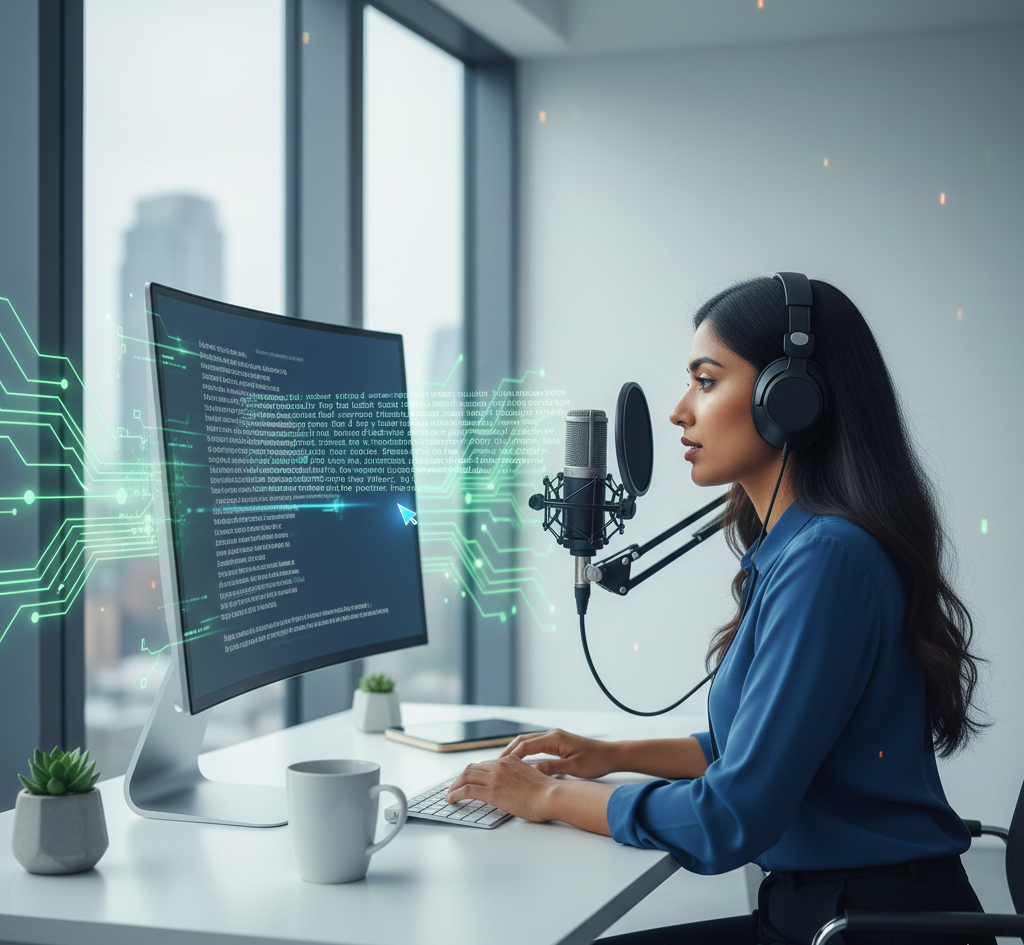
How Speech-to-Text Tools Can Save You Hours: The Power of Voice Typing
Imagine a world where your words effortlessly transform into text, freeing you from the constraints of typing. Welcome to the realm of speech-to-text (STT) technology, a game-changer for productivity, accessibility, and overall efficiency. Whether you're a busy professional, a student with endless notes, or simply looking for a more convenient way to communicate, voice typing can unlock hours of previously lost time. Stop typing and start talking!
This blog post explores the transformative power of speech-to-text tools. We'll delve into how they work, the myriad benefits they offer, ideal use cases, security considerations, and the remarkable improvements in accuracy that have made them indispensable in today's digital landscape.
Table of Contents
- How Speech-to-Text Works
- Benefits of Speech-to-Text Tools
- Ideal Use Cases for Voice Typing
- Security Considerations with STT
- Accuracy Improvements in Speech-to-Text
- List of Speech-to-Text Tools
- Speech-to-Text Tool Comparison
- Frequently Asked Questions
- Conclusion
How Speech-to-Text Works
Speech-to-text (STT) technology, also known as voice recognition, is a sophisticated process that converts spoken language into written text. Here's a simplified breakdown of how it typically works:
- Acoustic Modeling: The audio input (your voice) is analyzed and broken down into small units called phonemes. These are the basic building blocks of speech sounds.
- Language Modeling: The system uses a vast database of words, phrases, and grammatical rules to predict the most likely sequence of words based on the identified phonemes. This helps resolve ambiguities and improve accuracy.
- Algorithms and Machine Learning: Modern STT tools utilize advanced machine learning algorithms, particularly deep learning, to continuously learn and improve their accuracy. They are trained on massive datasets of spoken language, enabling them to recognize a wide range of accents, dialects, and speaking styles.
- Contextual Understanding: More advanced systems incorporate contextual understanding, considering the surrounding words and the overall topic to further refine the transcription.
Benefits of Speech-to-Text Tools
The advantages of using speech-to-text tools are numerous and can significantly impact various aspects of your life:
- Increased Productivity: Dictate documents, emails, and notes much faster than you can type. Many people can speak significantly faster than they type.
- Improved Accessibility: STT tools empower individuals with disabilities, allowing them to interact with computers and create content more easily.
- Reduced Strain and Fatigue: Avoid repetitive strain injuries (RSIs) associated with prolonged typing.
- Hands-Free Operation: Use voice commands to control devices and applications, ideal for situations where your hands are occupied.
- Multitasking: Draft ideas while commuting, cooking, or engaging in other activities.
- Enhanced Learning: Students can record lectures and transcribe them later for improved note-taking and comprehension.
- Convenience: Quickly jot down thoughts and ideas on the go, without needing to type.
Ideal Use Cases for Voice Typing
Speech-to-text technology is applicable in a wide variety of situations:
- Content Creation: Writing articles, blog posts, scripts, and books.
- Note-Taking: Capturing meeting minutes, lecture notes, and personal reminders.
- Email Communication: Composing and responding to emails quickly and efficiently.
- Customer Service: Transcribing customer interactions for quality assurance and training purposes.
- Medical Transcription: Converting doctor's notes and patient records into written format.
- Legal Documentation: Dictating legal documents and depositions.
- Accessibility: Assisting individuals with disabilities to use computers and communicate effectively.
Security Considerations with STT
While STT tools offer numerous benefits, it's crucial to be aware of the security implications:
- Data Privacy: Understand how the STT service provider handles your data. Review their privacy policy and ensure they have robust security measures in place.
- Encryption: Choose tools that use encryption to protect your voice data during transmission and storage.
- Access Control: Be mindful of who has access to your transcribed data. Implement strong passwords and access controls.
- Cloud vs. On-Premise: Consider whether you prefer a cloud-based STT service or an on-premise solution. On-premise solutions offer greater control over data security but may require more technical expertise to manage.
- Vendor Reputation: Select reputable STT providers with a proven track record of security and data protection.
Accuracy Improvements in Speech-to-Text
Significant advancements in machine learning and artificial intelligence have dramatically improved the accuracy of speech-to-text tools in recent years. Here are some key factors contributing to these improvements:
- Deep Learning: Deep neural networks can learn complex patterns in speech, leading to more accurate recognition.
- Large Datasets: Training STT models on vast amounts of audio data has significantly improved their ability to handle diverse accents and speaking styles.
- Contextual Awareness: Advanced algorithms now consider the context of the conversation to better predict the intended words.
- Noise Reduction: Sophisticated noise reduction techniques filter out background noise, resulting in cleaner and more accurate transcriptions.
- Customization: Some STT tools allow users to customize the models by training them on their own voice and vocabulary, further enhancing accuracy.
List of Speech-to-Text Tools
Here's a list of popular speech-to-text tools available:
- Google Docs Voice Typing: A free and readily accessible option within Google Docs.
- Otter.ai: A powerful transcription service with features like real-time transcription and speaker identification.
- Dragon NaturallySpeaking: A professional-grade STT software known for its accuracy and advanced features.
- Microsoft Dictate: Integrated into Microsoft Office applications, offering convenient voice typing functionality.
- Descript: A versatile audio and video editing tool with robust transcription capabilities.
- Trint: An AI-powered transcription platform designed for enterprise use.
- Onegotools Free Online Voice Typing Tool: A user-friendly web-based option with no installations required.
Speech-to-Text Tool Comparison
| Tool | Pricing | Accuracy | Features | Platform |
|---|---|---|---|---|
| Google Docs Voice Typing | Free | Moderate | Basic dictation | Web |
| Otter.ai | Subscription | High | Real-time transcription, speaker ID | Web, Mobile |
| Dragon NaturallySpeaking | One-time purchase | Very High | Advanced features, customization | Desktop |
| Microsoft Dictate | Included with Microsoft 365 | Moderate | Basic dictation | Desktop, Web |
| Descript | Subscription | High | Transcription, audio/video editing | Desktop, Web |
| Onegotools Free Online Voice Typing Tool | Free | Moderate | Simple and easy-to-use voice typing | Web |
Frequently Asked Questions
- How accurate are speech-to-text tools? Accuracy varies depending on the tool, the clarity of your speech, and the presence of background noise. Modern STT tools are generally very accurate, especially with good audio quality and proper training.
- Are speech-to-text tools secure? Security depends on the provider. Choose reputable services with strong encryption and data protection policies.
- Can I use speech-to-text tools offline? Some tools offer offline functionality, but accuracy may be reduced compared to online versions. Dragon NaturallySpeaking is a good option for offline use.
- What are the best practices for using speech-to-text tools? Speak clearly and at a moderate pace, minimize background noise, and use a high-quality microphone for optimal results.
- Are there any free speech-to-text tools available? Yes, several free options are available, including Google Docs Voice Typing and the Onegotools Free Online Voice Typing Tool.
Conclusion
Speech-to-text tools have revolutionized the way we interact with technology and create content. By harnessing the power of voice typing, you can unlock significant productivity gains, improve accessibility, and reduce strain associated with traditional typing. Whether you're a seasoned professional or simply looking for a more convenient way to communicate, explore the world of speech-to-text and discover how it can transform your workflow. Give the Onegotools Free Online Voice Typing Tool a try today and experience the future of text creation!



Comments (0)
Leave a Comment